
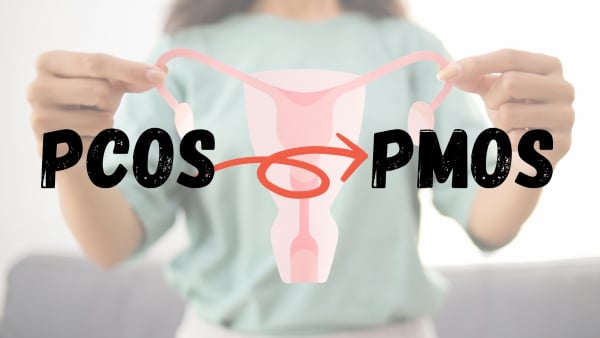
Direct answer: should I have bariatric surgery for PCOS (now called PMOS)?
If you have PCOS (newly renamed PMOS by The Lancet in May 2026) and significant obesity, bariatric surgery is the most effective intervention published to date. The Skubleny meta-analysis across 2,130 women showed PCOS prevalence dropped from 45.6% to 6.8% at 12 months post-surgery. The 2024 BAMBINI randomized trial in The Lancet showed bariatric surgery produces 2.5 times more ovulation than medical therapy.
If pregnancy is the goal, wait 12 to 24 months post-operatively before trying to conceive (ACOG guidance), so weight is stable and nutritional status is optimized.
My short rule is this:
- BMI above 35 with PMOS and trying to conceive: surgery first, then conceive at month 12-24.
- BMI 30-35 with mild PMOS, no fertility goal: GLP-1 or metformin first, surgery if symptoms persist.
- Severe insulin resistance, refractory cycles, or T2D coexisting with PMOS: surgery is the strongest option.
The 30-second summary
On May 12, 2026, an international consensus published in The Lancet officially renamed Polycystic Ovary Syndrome to Polyendocrine Metabolic Ovarian Syndrome (PMOS). The change matters because the old name implied a gynecological disease of "cysts." The new name names what the condition actually is: a multi-system hormonal and metabolic disorder. For women carrying significant obesity along with PMOS, this rename has direct treatment implications. The gastric sleeve works on PMOS because it pulls the metabolic levers (insulin, visceral fat, gut hormones) that drive the hormonal cascade. The 2024 BAMBINI randomized trial showed surgery produces 2.5 times more spontaneous ovulations than medical care. Meta-analyses across 2,000+ patients show clinical resolution in roughly 85% of cases within 12 months. Here is what to know.
Why the rename matters (and why it changes nothing about your treatment)
Let me start with something I have been telling my patients in consultation for years, long before The Lancet made it official.
PCOS is a misnomer. The cysts that gave the condition its name are not actually cysts in the medical sense. They are follicles arrested at an early stage of development, visible on ultrasound, and they are downstream of the real problem. After spending years in molecular biology research at the Brown Foundation Institute in Houston before I picked up a scalpel, and after operating on thousands of women carrying this diagnosis through my consultations in Tijuana, I can tell you the ovaries are not where this disease lives. They are where you see it.
The international consensus process that drove this rename involved 22,000 stakeholders, including patients, clinicians, researchers, and 56 leading organizations. They reached the same conclusion the metabolic surgery world arrived at decades ago: the name change reflects the broader polyendocrine disturbances occurring in women’s insulin, androgens and neuroendocrine and ovarian hormones, and the metabolic impacts these have on their lives.
Here is what is actually happening underneath, whether you call it PCOS or PMOS.
You have visceral fat. That fat is hormonally active. It pushes out inflammatory signals and disrupts how your liver and muscles respond to insulin. Your pancreas, sensing your blood sugar is harder to control, compensates by pumping out more insulin. (This is called hyperinsulinemia, and it is the silent driver of almost everything you feel.) High insulin tells your ovaries to make more testosterone. It also suppresses Sex Hormone Binding Globulin, the protein in your blood that normally keeps testosterone leashed. So now you have more testosterone, and more of it is free and biologically active. That is the hair on your chin. That is the acne along your jaw. That is why your cycles stretch out to 45 days, 60 days, six months.
That is PMOS.
The reason metformin helps some women is that it tugs on the insulin lever. The reason GLP-1s help is the same. And the reason a properly done bariatric surgery works better than either for women with significant obesity is that it pulls multiple levers at once. It removes the fat-producing capacity of the stomach’s hormonal cells (ghrelin drops), it shrinks the visceral fat depot that drives inflammation, and it normalizes insulin within weeks.
The treatment evidence does not change with the rename. What changes is how you should think about your own diagnosis. You do not have a gynecological problem with a metabolic side effect. You have a metabolic and endocrine problem that shows up most visibly in your reproductive system.
What actually happens to your hormones after a gastric sleeve
I want to walk you through the timeline I see in my own patients.
The first 6 weeks. Ghrelin (your hunger hormone, secreted mainly in the fundus of the stomach, which I have now removed) collapses to almost nothing. Insulin sensitivity improves measurably in the first two weeks, often before you have lost significant weight. This is because the surgery itself changes gut hormone signaling. Your fasting insulin drops. Your HOMA-IR improves.
Months 2 through 6. This is when the hormonal cascade really shifts. As visceral fat melts off, the inflammatory load on your liver decreases. SHBG starts to climb. Total testosterone falls. Free testosterone (the one that matters clinically) falls more steeply because higher SHBG is binding it up. Many of my patients report their cycles coming back somewhere between month 3 and month 6. The first period after years of irregularity is often a milestone women cry over.
Months 6 through 12. Ovulation returns in a high percentage of women who were anovulatory before. This is the window where contraception becomes essential, because fertility can return before you are ready for pregnancy. ACOG and the bariatric societies agree: wait at least 12 months after surgery before conceiving, ideally closer to 18 to 24 months, so the rapid weight loss phase does not compromise the pregnancy.
Years 1 through 5. Hirsutism (the unwanted hair) softens slowly. Hair follicles already converted to terminal hair will not disappear, but new growth thins out. Acne usually clears in the first 12 months. Mood and energy improve, partially because of the hormonal changes and partially because chronic inflammation drops.
These are not promises I am making. These are the patterns I see, and they line up with what the published meta-analyses report. A systematic review by Skubleny and colleagues, published in Obesity Surgery, looked at 13 studies covering 2,130 women: the incidence of PCOS preoperatively was 45.6%, which significantly decreased to 6.8% at 12-month follow-up. That is not a marginal effect. That is the disease becoming clinically undetectable in the majority of patients within a year.
A larger 2025 meta-analysis published in Frontiers in Endocrinology, looking at 27 studies, found bariatric surgery reduced menstrual irregularities with an odds ratio of 27.68 (95% CI 9.83 to 78.00) and hirsutism with an odds ratio of 6.61. Those are not gentle effect sizes.
The 2024 BAMBINI trial: surgical proof for fertility in PMOS
For years, the criticism of bariatric surgery for what was then called PCOS was fair. We had observational data, but no randomized controlled trial directly comparing surgery to medical therapy. The BAMBINI trial, published in The Lancet in May 2024, closed that gap.
The setup: women with PCOS (now PMOS), obesity, and either oligomenorrhoea or amenorrhoea were randomized to laparoscopic vertical sleeve gastrectomy or to a structured medical care arm that included behavioral modifications and pharmacotherapy.
The headline finding: women in the surgical group had 2.5 times more spontaneous ovulations compared with the medical group (incidence rate ratio 2.5, 95% CI 1.5 to 4.2, p < 0.0007). Cardiometabolic markers, psychological health scores, and quality-of-life measures all improved more in the surgical group.
Why this matters for you specifically: ovulation rate is the strongest predictor of future pregnancy. If you cannot ovulate, you cannot conceive without intervention. BAMBINI is the first high-quality randomized evidence that surgery does not just help with weight, it directly restores fertility at the physiological level.
A few honest caveats. The trial was modest in size. The surgical group had more complications, though no deaths and no major morbidity. And the trial was designed before GLP-1s became widely available, so the comparison was not surgery versus Ozempic or Wegovy. We do not yet have a head-to-head trial on that, and I would love to see one.
Those caveats matter, but they do not change the direction of the finding. Surgery worked. The mechanism makes biological sense. The benefit was meaningful. And the BAMBINI trial was one of the key evidence pieces cited in the Lancet PMOS rename paper, because it confirms the metabolic-first nature of the disease.
Will a gastric sleeve help me get pregnant?
This is the most common question I hear in my consultations from women in their late 20s and 30s. The honest answer: probably yes, with timing.
Women with PMOS have approximately 15 times the risk of anovulatory infertility compared to women without PMOS, according to the 2024 BAMBINI background data. Obesity makes that worse. Losing 20% to 30% of total body weight, which is what most of my patients achieve with the Enhanced Gastric Sleeve, addresses both the insulin resistance and the visceral fat that drives the hormonal disorder. In observational studies, pregnancy rates after bariatric surgery in women with this condition run roughly 2 to 4 times higher than pre-surgery baseline.
Here is the timing piece, and it is not negotiable in my practice.
You should not try to conceive for at least 12 months after surgery. 18 months is better. This is the consensus from ACOG, ASMBS, and AACE. The reason is mechanical and nutritional. In the rapid weight loss phase, your body is in a catabolic state. You are losing fat faster than a placenta would want you to. Micronutrients like B12, folate, iron, calcium, and vitamin D need to be replete before pregnancy. A 2021 multicenter study published in Obesity Surgery (Heusschen et al.) found that pregnancies conceived in the first 12 months had lower gestational age at delivery, lower gestational weight gain, and higher rates of preterm birth compared to those that waited.
For women with PMOS who have not ovulated in years, this surgical window means something else, too. Many of my patients have spent a decade on contraception they did not think they needed. Now they need it actively. Because fertility can return before you finish losing weight.
I tell every patient of reproductive age the same thing in consultation: we are doing this surgery to give you options. One of those options is pregnancy. Please respect the window.
What about Ozempic, Mounjaro, or just losing weight on my own?
Look, I am not anti-medication. If you can lose 25% of your body weight on a GLP-1 and maintain it long term, and your PMOS resolves with that approach, that is a win. I would rather you not need surgery.
But here is the data I have to share with you honestly.
Lifestyle alone. Modest weight loss of 5% to 10% does improve symptoms. The 2023 International PCOS Guidelines (now being updated under the PMOS framework) confirm this. But for women with a BMI over 35, the durability of lifestyle weight loss is poor. The published rates of sustained loss at 5 years are under 5%.
Metformin. Helpful for insulin resistance, modest effect on cycles. Does not drive significant weight loss on its own. Still recommended for metabolic features but its limits are well documented.
GLP-1s (Ozempic, Wegovy, Mounjaro, Zepbound). Can produce 15% to 22% weight loss in clinical trials, with corresponding hormonal improvements. The catch: you must stay on them. Most studies show 60% to 70% of the weight comes back within 12 months of stopping. Insurance coverage in the US for this indication specifically is inconsistent. Many of my US patients have been denied coverage despite a clear medical indication.
Bariatric surgery. Average total body weight loss with the Enhanced Gastric Sleeve in my practice is 65% to 80% of excess weight at 12 months. PMOS resolves in approximately 85% of patients. The hormonal changes appear durable at 5 years and beyond in the SOS study and other long-term cohorts.
The question I ask my patients to consider is not "which is best in isolation," but "which fits your life over the next 20 years?" Some women I see use a GLP-1 for 18 months, lose significant weight, get pregnant, and never need surgery. Others have tried every medication for a decade with no durable result and come to me ready for the structural solution. Both paths are legitimate. The wrong move is waiting another five years while your fertility window narrows and your insulin resistance worsens.
Who should not have a gastric sleeve for PMOS
This is the part most websites do not write because it costs them surgery candidates. I will write it anyway because it is true.
You should not have a gastric sleeve for PMOS if:
- Your BMI is below 30 and your insulin resistance is mild. Lifestyle and metformin should be tried first.
- You have severe untreated reflux. The sleeve can worsen GERD, and in your case we would discuss bypass instead.
- You are not committed to lifelong micronutrient supplementation. Bariatric surgery requires daily vitamins. Forever.
- You have an active eating disorder that has not been treated.
- You expect to conceive in the next 12 months. Wait for surgery, or wait for pregnancy.
- You are using surgery as a substitute for managing mental health. Surgery treats your stomach. It does not treat depression, trauma, or your relationship with food beyond hunger.
These are not soft contraindications. These are the conversations I have in consultations that sometimes end with: let us not operate.
What the Enhanced Gastric Sleeve specifically does differently
In my practice I perform what we call the Enhanced Gastric Sleeve, which is a refinement of the standard laparoscopic vertical sleeve gastrectomy. The differences are technical, but they matter for women with PMOS specifically.
Double buttress staple line reinforcement reduces the leak risk, which is the most feared complication of any sleeve procedure. Reflux-minded dissection preserves the angle of His and avoids the technical errors that drive post-sleeve GERD. For women with PMOS (who often have higher baseline insulin resistance and visceral fat pressing on the gastroesophageal junction), this matters. A drain-free protocol means you wake up without a tube and without the inflammation a drain causes. Recovery is faster, which matters when your body needs to focus its protein on rebuilding lean mass and recovering hormonal axes, not on fighting wound irritation. And a pre-emptive pain protocol gets most patients walking the same day. Less stress hormone (cortisol) means less interference with the insulin reset we are trying to achieve.
These are not marketing differences. They are decisions that come from 7,800+ procedures and a research background that taught me to think about every step of an operation as a variable that affects the molecular outcome.
Quick answers
What is PMOS and is it the same as PCOS?
Yes. On May 12, 2026, an international consensus published in The Lancet renamed Polycystic Ovary Syndrome (PCOS) to Polyendocrine Metabolic Ovarian Syndrome (PMOS). It is the same condition. The new name better reflects that the disease is metabolic and endocrine, not just gynecological.
Why was PCOS renamed?
The old name implied "cysts," which are not actually cysts and are not the cause of the disease. A multiyear effort renamed it to reflect the broader hormonal, metabolic, and systemic nature of the condition.
Can I get pregnant after a gastric sleeve if I have PMOS?
Yes, and your odds are significantly better. Ovulation typically returns within 6 to 12 months. Wait at least 12 months from surgery to conception, ideally 18 to 24.
Will my facial hair go away?
Existing terminal hair will not disappear without laser treatment, but new hair growth thins. Hirsutism scores improve significantly in published studies.
How much weight will I lose if I have PMOS?
Weight loss is comparable to non-PMOS patients, though some studies show slightly slower initial loss. Most of my patients reach 65% to 80% of excess weight loss at 12 months.
Do I need to stop my metformin after surgery?
Usually we taper it as your insulin resistance resolves. Your endocrinologist or I will manage this together.
Can I have a gastric sleeve if I am on Ozempic or Mounjaro?
Yes, but we typically pause GLP-1s 1 to 2 weeks before surgery for safety reasons related to gastric emptying and anesthesia.
Will my acne clear up?
In most patients, yes, usually within 6 to 12 months as androgen levels normalize.
Does insurance cover this for PMOS in the US?
Coverage depends on BMI thresholds and your plan’s specific bariatric policy. Most US patients I see come to Tijuana because they are paying out of pocket regardless. The math often works.
Is the surgery reversible if I change my mind?
The sleeve is not reversible. If reversibility matters to you, we would discuss other options in consultation.
What to do next
If you have read this far and recognize yourself in this article, the next step is a virtual consultation. I will review your medical history, your BMI, your labs if you have them (total testosterone, free T, SHBG, fasting insulin, HbA1c), and your goals. We will talk about whether surgery makes sense for you, what timing looks like, and what to expect.
You can request a free virtual evaluation, and my coordinator Lucia will reach out to schedule. We move at your pace.
PMOS does not have to define the rest of your life. The biology that drives it is reversible in most patients with the right intervention at the right time.
For the complete picture of how bariatric surgery affects all major obesity-related conditions, including procedure-specific differences and honest comparisons with GLP-1 medications across each condition, see the comprehensive evidence guide.
Sources
- Teede HJ, Bahri Khomami M, Morman R, et al. Polyendocrine metabolic ovarian syndrome, the new name for polycystic ovary syndrome: a multistep global consensus process. The Lancet. Published online May 12, 2026. doi:10.1016/S0140-6736(26)00717-8
- Samarasinghe SN, Leca B, Alabdulkader S, et al. Bariatric surgery for spontaneous ovulation in women living with polycystic ovary syndrome: the BAMBINI multicentre, open-label, randomised controlled trial. The Lancet. 2024;403(10443):2489-2503. doi:10.1016/S0140-6736(24)00538-5
- Benham JL, Booth JE, Friedenreich CM, Rabi DM, Sigal RJ. Impact of bariatric surgery on anthropometric, metabolic, and reproductive outcomes in polycystic ovary syndrome: a systematic review and meta-analysis. Obesity Reviews. 2024;25(6):e13737. doi:10.1111/obr.13737
- Skubleny D, Switzer NJ, Gill RS, et al. The Impact of Bariatric Surgery on Polycystic Ovary Syndrome: a Systematic Review and Meta-analysis. Obesity Surgery. 2016;26(1):169-176. PMID: 26431698
- Teede HJ, Tay CT, Laven JJE, et al. Recommendations from the 2023 International Evidence-based Guideline for the Assessment and Management of Polycystic Ovary Syndrome. J Clin Endocrinol Metab. 2023;108(10):2447-2469.
- Heusschen L, Krabbendam I, van der Velde JM, et al. A Matter of Timing. Pregnancy After Bariatric Surgery. Obesity Surgery. 2021;31(5):2072-2079. doi:10.1007/s11695-020-05219-3
- ACOG Interpregnancy Care Guidelines. American College of Obstetricians and Gynecologists.
- Eisenberg D, Shikora SA, Aarts E, et al. 2022 ASMBS and IFSO: indications for metabolic and bariatric surgery. Surg Obes Relat Dis. 2022;18(12):1345-1356.
Authored by Dr. Gabriela Rodríguez Ruiz, MD, PhD, FACS. Updated to reflect the May 12, 2026 Lancet publication renaming PCOS to PMOS. Reviewed against the 2024 BAMBINI randomized controlled trial.