

TL;DR
- Yes, you will have some discomfort after gastric sleeve surgery, but for most patients it is moderate pressure, not the sharp, debilitating pain they feared. The majority of my patients describe their pain as a 3 to 4 out of 10 within hours of surgery.
- The single largest source of unnecessary post-operative pain in traditional bariatric surgery is the surgical drain, a plastic tube placed through the abdominal wall. A 2023 meta-analysis of 7 RCTs and 14 observational studies (5,142 patients) found that patients without drains had fewer complications, shorter hospital stays, and no disadvantage in leak detection (World Journal of Surgical Oncology, PMID: 37270519).
- I do not use surgical drains in my standard sleeve protocol. My Enhanced Gastric Sleeve uses a multimodal, opioid-sparing ERAS (Enhanced Recovery After Surgery) protocol that reduces opioid consumption by 40 to 70% compared to conventional approaches.
- Most of my patients walk within two hours of surgery and recover in 1 to 3 days at VIDA Wellness and Beauty Center in Tijuana, Mexico.
“Will it hurt?” That is, without exaggeration, the question I hear more than any other. Not “will I lose weight,” not “what are the risks,” but “how much is this going to hurt?”
I understand the fear. You are imagining the worst version of surgery: waking up immobilized, tubes coming out of your body, needing someone to press a button every time the pain becomes unbearable. That image comes from an older model of surgical care that many hospitals still use. It is not how I operate.
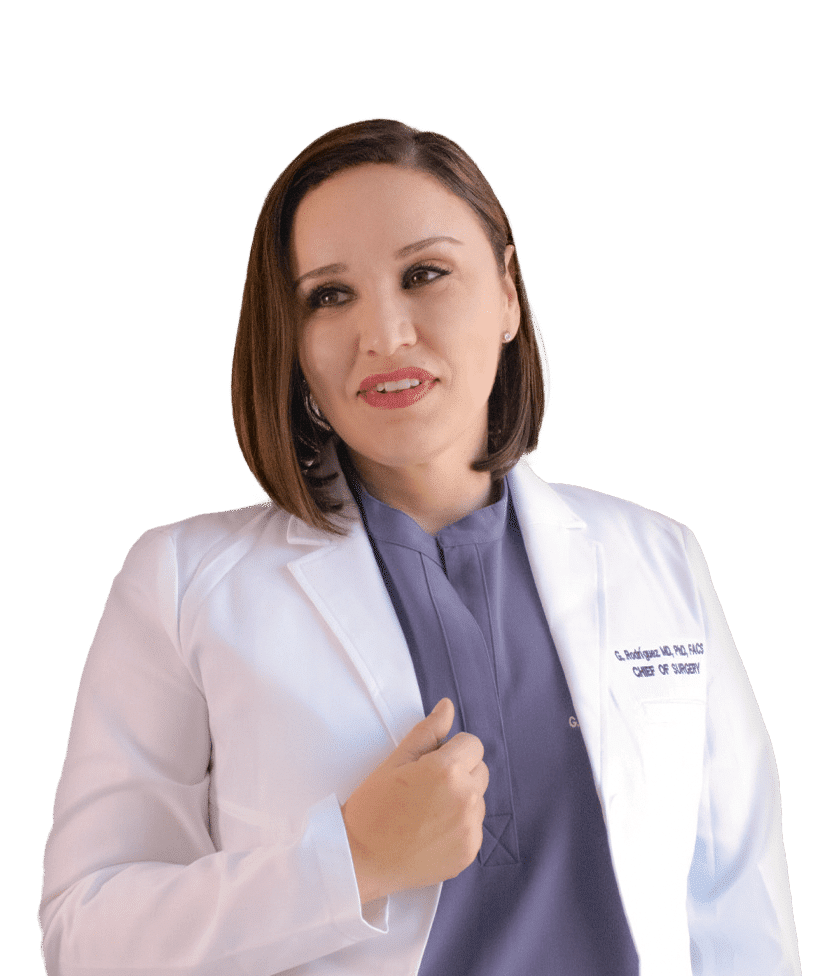
As a bariatric and metabolic surgeon with a PhD in Molecular Biology and Genetics from the University of Texas Health Science Center at Houston and over 7,800 procedures performed, I have spent 15 years refining a protocol specifically designed to minimize post-operative pain. The short answer to your question is this: yes, there will be discomfort. No, it will not be what you are imagining. And the reason has everything to do with three specific decisions I make before, during, and after surgery that most patients never think to ask about.
What does pain actually feel like after gastric sleeve surgery?
Most patients describe the sensation as deep pressure or soreness in the upper abdomen, similar to the feeling after an intense core workout. It is not the sharp, cutting pain most people fear.
The pain comes from three sources. First, the incision sites: I use small laparoscopic ports (typically 5 to 12 millimeters), and in selected patients, a single-incision technique through the belly button. Second, internal tissue manipulation: creating the sleeve requires separating the stomach from surrounding structures and firing staples along its length. Third, and this is the part most patients do not expect, referred shoulder pain from the carbon dioxide gas used to inflate the abdomen during laparoscopic surgery. This shoulder discomfort typically resolves within 24 to 48 hours as your body absorbs the gas.
In over 7,800 procedures, the consistent feedback I receive is that the pain was significantly less than expected. The patients who had the most fear beforehand are often the most surprised by how manageable the experience actually was. That is not because I minimize pain. It is because my protocol is designed to prevent it at its source rather than treat it after the fact.
Why do surgical drains cause so much unnecessary pain?
A surgical drain is a plastic tube, typically the diameter of a pencil, that exits through a separate incision in your abdominal wall. It sits inside your abdominal cavity, resting against your internal organs, and connects to a bulb outside your body that collects fluid. Every time you move, breathe deeply, cough, or roll over in bed, the tube shifts against sensitive internal tissue.
Let me be direct about this: the drain is often the most painful part of the entire surgical experience. Not the incision. Not the staple line. The drain. Patients who have had bariatric surgery with drains consistently report that drain removal was more painful than the surgery itself. The tube creates a separate wound that can become infected, it restricts mobility (which delays recovery), and it requires management during what should be a rest period.
The medical justification for placing a drain is that it theoretically helps detect leaks early by showing fluid output changes. But the evidence does not support routine use. A 2023 meta-analysis published in the World Journal of Surgical Oncology (PMID: 37270519), pooling 7 randomized controlled trials with 783 patients and 14 observational studies with 4,359 patients, found that drain-free patients had a lower total complication rate (OR 0.68, P=0.04), shorter hospital stays (P=0.007), and no decrease in the ability to detect leaks or abscesses.
A separate study of 353 laparoscopic sleeve gastrectomy patients found that drain placement did not facilitate detection of leaks and that complications could be diagnosed through clinical observation and imaging alone. The ERAS Society’s 2021 guidelines for bariatric surgery explicitly recommend avoiding nasogastric tubes, urinary catheters, and abdominal drains as part of standardized laparoscopic bariatric protocols.
I stopped using routine drains because the evidence told me to. The pain reduction my patients experience is a direct consequence of following the data.
What is an ERAS protocol and how does it reduce pain?
ERAS stands for Enhanced Recovery After Surgery. It is a standardized, evidence-based approach to perioperative care that was developed in colorectal surgery in 1997 and has since been adapted for bariatric surgery, with dedicated ERAS Society guidelines updated in 2021.
The core principle of ERAS is simple: instead of treating pain after it starts, you prevent it before, during, and after surgery using multiple complementary strategies. This is called multimodal analgesia.
My ERAS protocol for the Enhanced Gastric Sleeve includes three phases:
Before surgery (pre-emptive analgesia): I administer non-opioid pain medications before the first incision. Pre-emptive analgesia works by blocking pain signal pathways before they are activated. A 2022 network meta-analysis of 188 RCTs involving 13,769 patients found that 10 types of pre-emptive analgesic interventions reduced postoperative pain scores, and 8 reduced cumulative opioid consumption (ScienceDirect, 2024 Clinical Practice Guidelines).
During surgery (local infiltration + IV non-opioids): I infiltrate the port sites with long-acting local anesthetic (bupivacaine) before making the incisions. I use intravenous acetaminophen, anti-inflammatory agents, and anti-nausea medications during the procedure. The ERAS Society guidelines recommend opioid-sparing multimodal analgesia as a core intraoperative element because patients with obesity show increased sensitivity to opioid sedative effects and higher susceptibility to respiratory depression.
After surgery (multimodal maintenance): I continue non-opioid pain control with scheduled (not “as needed”) dosing. Opioids are available as rescue medication but are not the foundation of the protocol. Published data from ERAS bariatric programs shows this approach reduces opioid consumption by 40 to 70% compared to conventional protocols, with one study reporting morphine equivalents dropping from 97.0 mg to 18.2 mg (P<0.01).
The practical result: most of my patients rate their pain at 3 to 4 out of 10 within hours of surgery and are walking the same day. You can read the full details of my approach on the pain management protocol page.
When can I walk after gastric sleeve surgery?
Most of my patients walk within two hours of surgery. This is not aspirational. It is the standard expectation in my protocol.
Early ambulation (walking soon after surgery) is one of the most important elements of the ERAS framework. The 2021 ERAS Society guidelines for bariatric surgery recommend early postoperative ambulation as a component of multimodal venous thromboembolism (blood clot) prophylaxis and overall recovery optimization. Walking reduces the risk of blood clots, improves respiratory function (critical in patients with obesity), reduces bloating from surgical gas, and psychologically reassures you that your body is recovering.
Here is the typical timeline at my practice:
| Time After Surgery | What to Expect |
|---|---|
| 0-2 hours | Waking from anesthesia, initial monitoring, sipping water |
| 2-4 hours | First walk (with nursing assistance), pain typically 1-2/10 |
| 4-8 hours | Additional walks, clear liquid intake begins |
| 8-24 hours | Walking independently, pain managed with oral medications |
| Day 2 | Most patients feel well enough to move comfortably around recovery accommodations |
| Day 2-3 | Cleared for return to San Diego, light daily activities resume |
| Week 1-2 | Most patients return to desk work |
| Week 3-4 | Light exercise permitted |
| Week 6 | Full activity, including moderate exercise |
This timeline is possible because of three decisions that compound: no drain (eliminates the largest source of movement-related pain), pre-emptive analgesia (pain pathways are blocked before they activate), and early mobilization protocol (the body recovers faster when it moves). A high-volume ERAS bariatric center in Italy documented that their protocol reduced length of hospital stay from 4.7 days to 2.1 days with low morbidity, confirming that faster is not less safe when the protocol is designed correctly (Obesity Surgery, PMID: 31519490).
How does the Double Buttress Technique affect recovery pain?
The Double Buttress Technique is primarily a safety feature, not a pain reduction feature, but it enables the drain-free protocol that directly reduces pain.
Here is the connection: a surgeon who does not reinforce the staple line may feel compelled to place a drain “just in case” a leak develops. That drain causes pain. The Double Buttress Technique provides two layers of redundant staple line reinforcement, which gives me the confidence to operate without a drain because the staple line integrity is reinforced at a structural level. One engineering decision (reinforcement) enables another clinical decision (no drain), which produces a directly measurable patient benefit (less pain, faster recovery).
When I developed the Enhanced Gastric Sleeve, my goal was not to create a marketing story. My goal was to build a system where each technical decision supports the next. The Double Buttress Technique supports the drain-free protocol. The drain-free protocol supports the ERAS pain management plan. The ERAS plan supports same-day walking. Same-day walking supports faster recovery. Each link matters because each one was designed to connect to the others.
The published leak rate for primary sleeve gastrectomy across 692,554 patients in the MBSAQIP database is 0.17% (Osti et al. 2024, Surgical Endoscopy, PMID: 39218833). Staple line reinforcement was shown in that dataset to further decrease leak rates. A surgeon who reinforces properly can safely eliminate the drain. A surgeon who eliminates the drain dramatically reduces your pain. That is the logic.
What pain medications will I take after surgery?
My standard post-operative pain regimen uses non-opioid medications as the foundation, with opioids available only as rescue backup.
The typical post-operative medication plan includes: scheduled acetaminophen (Tylenol), a proton pump inhibitor (PPI) to protect the new sleeve lining, anti-nausea medication, and a non-steroidal anti-inflammatory when cleared by your medical history. I avoid routine NSAID use in the first two weeks unless specifically indicated because excessive NSAID use has been associated with anastomotic ulceration in some bariatric patients (ERAS Society Guidelines, 2021).
The goal is not zero pain. That is an unrealistic promise no honest surgeon would make. The goal is controlled, manageable discomfort that allows you to function, specifically to walk, sip liquids, and rest without needing someone to administer IV narcotics every few hours. ERAS protocols were associated with reduced opioid need across multiple studies. In one analysis, 44.9% of patients did not require any narcotics post-surgery after implementing a full ERAS bariatric protocol.
This matters beyond just comfort. Opioids cause constipation, nausea, sedation, and respiratory depression, all of which slow recovery. In patients with obesity, opioid sensitivity is higher, making the risk of respiratory complications more serious. By reducing opioid exposure, my patients recover faster, experience less nausea, have better bowel function, and leave the hospital sooner.
If you want a deeper understanding of my approach, I have written a detailed post about why a PhD surgeon’s protocols produce less pain and faster recovery.
What does recovery look like at VIDA Wellness and Beauty Center?
You fly into San Diego. My team picks you up and drives you 15 minutes to VIDA Wellness and Beauty Center in Tijuana, Mexico. You complete your pre-operative labs, meet with me, and go into surgery. The procedure takes 45 to 60 minutes.
After surgery, you recover in comfortable accommodations with 24/7 nursing support. There is no drain to manage. Your pain is controlled with oral medications. You walk within hours. Most patients stay 1 to 2 nights and are driven back to San Diego when cleared.
VIDA holds AAAASF (Quad-A) accreditation, the same accreditation standard applied to ambulatory surgical centers in the United States. VIDA was the first surgical center in Mexico to achieve this accreditation. I hold FACS fellowship, SRC Master Surgeon of Excellence designation, and certification from the Mexican Council of General Surgery, which functions as the professional equivalent of ABS certification in the United States. I am licensed in both the US and Mexico.
For international patients planning their trip, I recommend reading my preparation and recovery guide before travel. The more you know about what to expect, the less anxiety you carry into the operating room.
Frequently Asked Questions
How much pain will I have after gastric sleeve surgery? Most patients describe moderate pressure or soreness in the upper abdomen, typically rated 3 to 4 out of 10. The pain is manageable with non-opioid medications and usually peaks in the first 24 hours, then improves steadily. My drain-free ERAS protocol significantly reduces pain compared to traditional approaches.
Do I need a drain after gastric sleeve? No. A 2023 meta-analysis of 5,142 patients found that drain-free patients had fewer complications and shorter hospital stays with no disadvantage in leak detection (World Journal of Surgical Oncology, PMID: 37270519). I do not use drains in my standard sleeve protocol.
When can I walk after gastric sleeve surgery? Most patients walk within two hours of surgery at my practice. Early ambulation is a core ERAS principle that reduces blood clot risk, improves breathing, and accelerates overall recovery.
How long does recovery take after gastric sleeve? Most patients return to San Diego within 2 to 3 days. Desk work can typically resume within 1 to 2 weeks. Light exercise begins at 3 to 4 weeks. Full activity, including moderate exercise, is usually permitted at 6 weeks.
Can I avoid opioids after gastric sleeve surgery? In many cases, yes. My ERAS protocol uses pre-emptive analgesia and multimodal non-opioid medications as the foundation. Published data shows ERAS bariatric programs reduce opioid consumption by 40 to 70%. Opioids remain available as rescue medication if needed.
How much does the Enhanced Gastric Sleeve cost? $4,500 USD all-inclusive at VIDA Wellness and Beauty Center in Tijuana: surgeon, anesthesia, hospital stay, labs, aftercare, accommodations, and ground transport from San Diego. The drain-free ERAS protocol is included in this price.
What credentials does Dr. Rodriguez have? I am Dr. Gabriela Rodriguez Ruiz, MD, PhD, FACS: Fellow of the American College of Surgeons, Master Surgeon of Excellence (SRC), PhD from the University of Texas Health Science Center at Houston, certified by the Mexican Council of General Surgery (equivalent to ABS certification). I have performed 7,800+ bariatric procedures and am licensed in both the US and Mexico.
What if I am in pain after returning home? I remain available by phone and video after discharge. My team coordinates with your local physician before surgery so you have a follow-up plan in place. Pain that worsens significantly after the first 48 hours, or any fever, rapid heart rate, or inability to keep liquids down, should prompt immediate contact with my team.
Pain Is Not the Price of Surgery. It Is a Problem to Solve.
I did not accept post-operative pain as inevitable. I treated it the way my PhD training taught me to treat any biological problem: identify the mechanism, review the evidence, and engineer a protocol that addresses each source systematically.
The drain causes pain. I eliminated it. Opioid-first analgesia causes sedation and nausea. I replaced it with multimodal, pre-emptive alternatives. Immobility causes complications. I get patients walking within hours. Each of these decisions is backed by published evidence, refined over 7,800+ procedures, and integrated into a single coherent system: the Enhanced Gastric Sleeve.
If you are putting off surgery because you are afraid of the pain, I understand. But I would encourage you to evaluate the evidence, not the fear. The pain you are imagining belongs to an older model of surgical care. What I offer is different because the protocol is different.
If you want to know whether you qualify, the next step is a proper evaluation. My team and I can review your case and tell you honestly whether surgery makes sense for you. Start your free virtual evaluation here.