

TL;DR
- Both gastric bypass and gastric sleeve can put type 2 diabetes into remission, but bypass produces higher remission rates, particularly for patients with longer disease duration. A 2025 meta-analysis in Obesity Surgery found that bypass patients were 2.77 times more likely to achieve remission than sleeve patients (OR 2.77, 95% CI 1.83-4.20).
- The difference is biological, not just mechanical. Bypass reroutes food past the duodenum, triggering a three- to fivefold increase in GLP-1 (the same hormone that Ozempic mimics), altering bile acid signaling, and eliminating a suspected anti-incretin signal from the upper intestine. Sleeve produces some of these effects but not all.
- Remission is not guaranteed. The strongest predictors of non-remission are long disease duration, current insulin use, and low C-peptide levels, all markers of irreversible beta-cell damage. Early intervention produces better outcomes.
- I perform both gastric bypass and the Enhanced Gastric Sleeve at VIDA Wellness and Beauty Center in Tijuana. The right procedure depends on your specific metabolic profile, not a one-size-fits-all recommendation.
Most patients come to me asking about weight loss. But for the subset of my patients who have type 2 diabetes, the conversation is fundamentally different. They are not just asking whether they will lose weight. They are asking whether they can stop injecting insulin. Whether they can stop checking their blood sugar four times a day. Whether they can stop worrying about kidney damage, nerve damage, and blindness.
The answer, based on over two decades of published evidence, is that metabolic bariatric surgery is the most effective intervention available for type 2 diabetes remission in patients with obesity. A 2025 meta-analysis published in Obesity Surgery (PMID: 40377815), pooling three randomized controlled trials with 613 patients, found that Roux-en-Y gastric bypass patients were 2.77 times more likely to achieve complete diabetes remission than sleeve gastrectomy patients. But that number alone does not tell you which surgery is right for you. As a bariatric and metabolic surgeon with a PhD in Molecular Biology and Genetics from the University of Texas Health Science Center at Houston, I want to explain the biological mechanisms behind these results so you can understand why the procedures differ and how that difference maps to your specific condition.
Which bariatric surgery has higher diabetes remission rates?
Gastric bypass produces higher diabetes remission rates than gastric sleeve in most published comparative studies, but the magnitude of the difference varies by study design, patient population, and how remission is defined.
The most recent and rigorous data comes from the Oseberg trial, a triple-blind RCT published in The Lancet Diabetes & Endocrinology in 2025. At five years, 50% of gastric bypass patients achieved an HbA1c below 6.0% without medication, compared to 20% of sleeve patients (risk difference 29.5%, 95% CI 10.8-48.3%). The bypass group also achieved greater weight loss (22.2% vs. 17.2%) and larger reductions in LDL cholesterol.
A 2024 study published by the American College of Surgeons examined 270 patients from Mayo Clinic followed for at least five years. Overall, 75% of bypass patients maintained diabetes remission versus 34.8% of sleeve patients. Critically, sleeve patients who regained weight were 5.5 times more likely to see their diabetes return than bypass patients who regained the same amount of weight. This suggests that bypass confers metabolic benefits independent of weight loss alone.
The largest comparative dataset comes from the PCORNet study (9,710 patients), which found a more modest difference: 86.1% remission for bypass versus 83.5% for sleeve at five years (hazard ratio 1.10). This study used a less strict remission definition and a real-world population, which may explain the smaller gap.
Here is what I tell my patients: if your primary goal is diabetes remission, and you have had diabetes for more than five years or are currently on insulin, the published evidence favors bypass. If your diabetes is recent, your HbA1c is moderately elevated, and you have strong beta-cell reserve, both procedures can produce excellent metabolic outcomes.
How does bariatric surgery put type 2 diabetes into remission?
The answer is not just “you lose weight and your blood sugar improves.” That is part of it. But it is not the full picture, and understanding the full picture is what separates a surgeon who simply operates from a surgeon who understands the molecular biology of the disease.
There are four distinct mechanisms at work, and they differ between bypass and sleeve.
Mechanism 1: Caloric restriction and weight loss. Both procedures dramatically reduce caloric intake and produce significant weight loss. Weight loss improves insulin sensitivity, reduces hepatic glucose production, and decreases visceral fat, the metabolically active fat that drives insulin resistance. This mechanism is shared equally by both procedures. A calorie-matched diet produces the same short-term glucose improvement, which confirms that weight loss alone accounts for the initial effect.
Mechanism 2: The incretin effect (GLP-1 amplification). This is where the biology gets interesting. After gastric bypass, postprandial GLP-1 levels increase three- to fivefold. GLP-1 (glucagon-like peptide-1) is a hormone produced by L-cells in the distal ileum that stimulates insulin secretion, inhibits glucagon, delays gastric emptying, and promotes satiety. This is the same hormone that medications like Ozempic and Mounjaro are designed to mimic. After bypass, your body produces dramatically more of it naturally. This increase occurs within 48 hours of surgery, before any significant weight loss, and persists for years. Sleeve gastrectomy also increases GLP-1, but the effect is smaller and more variable across studies.
Mechanism 3: Duodenal exclusion (the foregut hypothesis). Gastric bypass reroutes food past the duodenum entirely. Research in animal models (Goto-Kakizaki rats, Kindel et al. 2009) demonstrated that excluding the duodenum from nutrient contact improves glucose tolerance through a GLP-1 receptor-mediated mechanism, independent of weight loss. A 2013 review in Diabetes Care described a suspected “anti-incretin” signal from the proximal intestine that normally counteracts insulin secretion; bypassing the duodenum may eliminate this pathological signal. This mechanism does not exist after sleeve gastrectomy because the intestinal anatomy remains intact.
Mechanism 4: Bile acid signaling. After bypass, serum bile acids increase significantly because bile has less time to mix with food before reaching the ileum. Free bile acids activate the TGR5 receptor on L-cells, further amplifying GLP-1 production. They also activate the nuclear receptor FXR, which stimulates FGF-19, a hormone that regulates hepatic glucose metabolism. FGF-19 levels are decreased in diabetes; after bypass, both FGF-19 and bile acid levels increase more than after sleeve.
I studied these molecular pathways during my PhD at the Brown Foundation Institute of Molecular Medicine. This is not abstract biochemistry. It is the biological explanation for why a patient can walk into my operating room injecting 60 units of insulin daily and walk out three days later with normal blood glucose on zero medication. I have seen this pattern in my practice repeatedly across 7,800+ procedures.
Does gastric sleeve also treat diabetes? When is it the better choice?
Yes. Gastric sleeve is effective for type 2 diabetes remission, particularly in patients with recent-onset diabetes, moderate HbA1c elevation, and preserved beta-cell function.
The sleeve works through weight loss, ghrelin reduction (the “hunger hormone” is primarily produced in the gastric fundus, which is removed during sleeve gastrectomy), and a moderate increase in GLP-1 due to rapid gastric emptying and accelerated intestinal transit. The sleeve does not bypass the duodenum, so the foregut mechanism and the full bile acid amplification do not occur.
In my practice, I recommend the Enhanced Gastric Sleeve for diabetic patients who meet these criteria: diabetes duration under five years, HbA1c below 8.5%, no current insulin use or low insulin doses, and BMI 30-40. For these patients, the sleeve offers comparable metabolic improvement with a simpler anatomy, no malabsorption risk, lower long-term vitamin deficiency rates, and a faster recovery.
I recommend gastric bypass when the metabolic disease is more severe: diabetes duration over five years, HbA1c above 8.5%, current insulin use exceeding 30 units daily, or the presence of multiple comorbidities including hypertension and dyslipidemia. The additional metabolic mechanisms of bypass, specifically duodenal exclusion and bile acid amplification, provide a stronger intervention for entrenched metabolic disease.
What about high blood pressure, sleep apnea, and other comorbidities?
Both procedures resolve or significantly improve most obesity-related comorbidities, though bypass shows modest advantages in metabolic outcomes specifically.
| Comorbidity | Gastric Bypass Resolution Rate | Gastric Sleeve Resolution Rate | Evidence Source |
|---|---|---|---|
| Type 2 diabetes (5-year remission) | 50-75% | 20-55% | Oseberg 2025, Mayo Clinic 2024 |
| Hypertension | 65-75% improvement | 55-68% improvement | ASMBS 2025 Fact Sheet |
| Obstructive sleep apnea | 80-85% resolution | 75-80% resolution | Buchwald meta-analysis |
| Dyslipidemia (high cholesterol) | 70-80% improvement | 60-70% improvement | Oseberg 2025 (LDL reduction) |
| GERD (acid reflux) | Often improved | May worsen (20-30% develop new GERD) | 2022 ASMBS/IFSO guidelines |
The GERD data is important. Sleeve gastrectomy can worsen or create new acid reflux in 20 to 30% of patients, while bypass typically improves it. If you already have significant GERD, bypass may be the better option regardless of your diabetes status. For patients interested in how metabolic surgery addresses comorbidities beyond diabetes, I have written a detailed guide on metabolic surgery and diabetes remission.
When is it too late for metabolic surgery to reverse diabetes?
Let me be direct about this: metabolic surgery cannot reverse diabetes that has progressed to the point of irreversible beta-cell destruction.
The beta cells in your pancreas are the cells that produce insulin. In early type 2 diabetes, the problem is primarily insulin resistance: your cells do not respond properly to the insulin your pancreas produces. At this stage, surgery is highly effective because it restores insulin sensitivity and amplifies incretin signaling. But as diabetes progresses over years, the beta cells themselves begin to die. Once they are gone, no surgery can bring them back.
The three strongest predictors of diabetes non-remission after surgery, consistently identified across studies, are long disease duration (more than 10 years), current insulin dependence, and low C-peptide levels (a blood marker that indicates how much insulin your pancreas is still producing). If your C-peptide is very low, your beta cells have sustained irreversible damage, and even bypass may only improve, not fully resolve, your diabetes.
This is why I advocate strongly for early intervention. Every year of uncontrolled diabetes is a year of progressive beta-cell loss. The 2022 ASMBS/IFSO guidelines now recommend metabolic surgery for patients with BMI 30 to 34.9 who have metabolic disease, precisely because waiting for a patient to reach BMI 40 means years of additional metabolic damage. If you have been denied insurance for bariatric surgery with a BMI between 30 and 35, this is the clinical argument for why that denial may be costing you your beta cells.
Why does a PhD in Molecular Biology matter for metabolic surgery?
It matters because the decision between bypass and sleeve for a diabetic patient is not a surgical decision alone. It is a biological decision.
Most bariatric surgeons are excellent technical operators. They can perform either procedure safely. But choosing the right procedure for a specific patient’s metabolic profile requires understanding incretin physiology, bile acid signaling pathways, beta-cell function, and the molecular differences between insulin resistance and beta-cell failure. My PhD research at the University of Texas Health Science Center focused on cardiovascular and molecular biology. I published in Circulation and Cardiovascular Research, journals that sit at the intersection of metabolism, vascular biology, and organ-level physiology. That training shapes every surgical recommendation I make.
When a patient sends me their labs, I do not just look at their BMI. I look at their HbA1c trajectory over time, their C-peptide levels, their fasting insulin, their lipid panel, and their blood pressure trend. I am evaluating how much metabolic reserve they have left and which surgical mechanism will give them the best chance of full remission. That is the difference between a surgeon and a scientist who also operates.
I perform both procedures at VIDA Wellness and Beauty Center in Tijuana, Mexico, 15 minutes from the San Diego border. My Enhanced Gastric Sleeve is $4,500 USD all-inclusive. Gastric bypass pricing is available through a virtual consultation. Both procedures are performed at an AAAASF-accredited facility with the same equipment standards required in US ambulatory surgery centers. I hold FACS fellowship, SRC Master Surgeon of Excellence designation, and certification from the Mexican Council of General Surgery (equivalent to ABS certification in the United States).
Frequently Asked Questions
Which bariatric surgery is best for type 2 diabetes? Gastric bypass produces higher remission rates than sleeve gastrectomy, particularly for patients with longer disease duration or insulin dependence. A 2025 meta-analysis found bypass patients were 2.77 times more likely to achieve remission (Obesity Surgery, PMID: 40377815). However, sleeve can also produce excellent results in early-stage diabetes.
Can gastric sleeve cure type 2 diabetes? The sleeve can put type 2 diabetes into remission, meaning HbA1c normalizes without medication. The Oseberg trial (2025) showed 20% remission at 5 years with strict criteria (HbA1c <6%), while the PCORNet study showed 83.5% remission with broader criteria. Remission is more likely with recent-onset diabetes and preserved beta-cell function.
How does bariatric surgery reverse diabetes biologically? Four mechanisms: weight loss improving insulin sensitivity, a three- to fivefold increase in GLP-1 (the hormone Ozempic mimics), exclusion of the duodenum from nutrient contact (bypass only), and altered bile acid signaling that further amplifies incretin production. These changes begin within 48 hours of surgery.
What is the minimum BMI for metabolic surgery? The 2022 ASMBS/IFSO guidelines recommend surgery for BMI 35+ regardless of comorbidities, and for BMI 30-34.9 with metabolic disease including type 2 diabetes. I evaluate patients in the BMI 30-35 range who have been denied insurance.
Does bariatric surgery help with high blood pressure and sleep apnea? Yes. Both procedures improve or resolve hypertension in 55-75% of patients and obstructive sleep apnea in 75-85% of patients. Bypass shows a modest advantage in metabolic comorbidity resolution.
How much does metabolic surgery cost in Tijuana? My Enhanced Gastric Sleeve is $4,500 USD all-inclusive at VIDA Wellness and Beauty Center. Gastric bypass pricing is discussed during a virtual consultation. Both include surgeon, anesthesia, hospital stay, labs, aftercare, accommodations, and ground transport from San Diego.
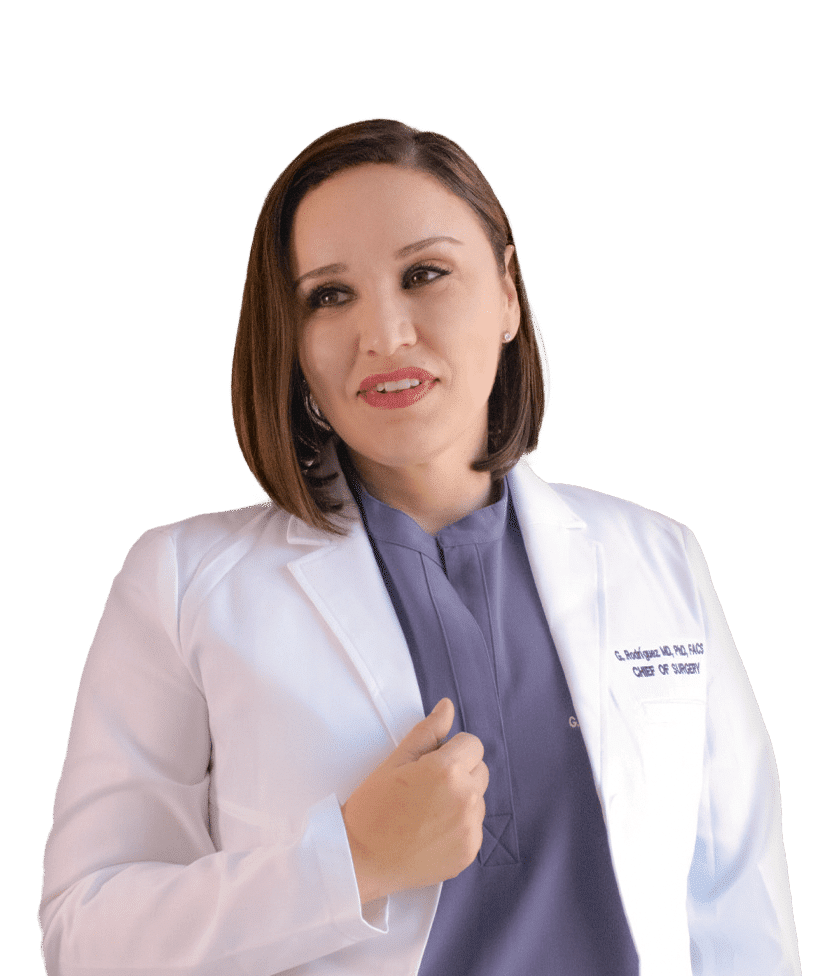
What credentials does Dr. Gabriela Rodriguez have for metabolic surgery? I am Dr. Gabriela Rodriguez Ruiz, MD, PhD, FACS. My PhD in Molecular Biology and Genetics from the University of Texas Health Science Center at Houston focused on cardiovascular and metabolic research. I am a Fellow of the American College of Surgeons, Master Surgeon of Excellence (SRC), and have performed 7,800+ bariatric procedures. I am licensed in both the US and Mexico.
Is it too late for surgery if I have had diabetes for 10+ years? Surgery may still significantly improve your diabetes, but complete remission is less likely with long disease duration, high insulin doses, and low C-peptide levels. A thorough metabolic evaluation, including C-peptide testing, is essential before making a decision. I provide honest assessments during virtual consultations.
The Right Surgery Depends on Your Biology, Not a Marketing Pitch
I do not recommend the same procedure to every patient. That would be surgical laziness. The decision between bypass and sleeve for a diabetic patient requires understanding the patient’s specific metabolic state: how long they have had diabetes, how much insulin they require, how much beta-cell function remains, and what other comorbidities are present.
If you have type 2 diabetes and you are considering surgery, the first step is not choosing a procedure. It is getting a proper metabolic evaluation. My team and I can review your labs, your medication history, and your metabolic profile and tell you honestly which procedure gives you the best chance of remission, or whether surgery is appropriate for you at all.