

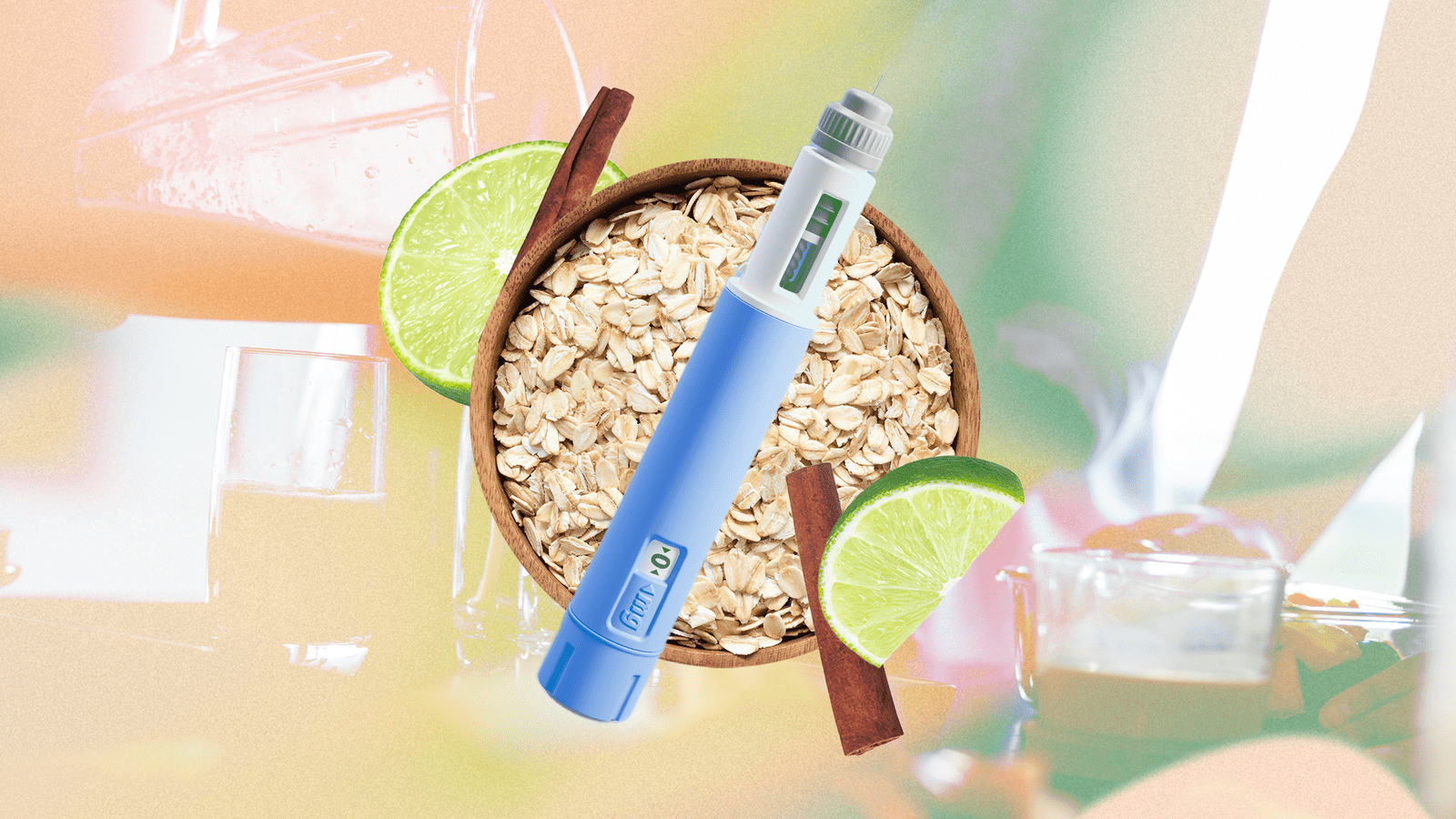
Blending oats with lime juice won’t give you the same results as a GLP-1 medication. But let’s talk about why these trends exist and what they actually do.
TL;DR: Oatzempic (oats, water, lime) and Ricezempic (rice water, lime) are viral TikTok drinks claiming to mimic Ozempic’s weight loss effects. They don’t. The science behind resistant starch is real but modest, and these drinks are nutritionally incomplete. If you’re using them as meal replacements, you might lose weight, but not because of any magic ingredient.
- These drinks contain resistant starch, which has some real benefits
- They do NOT work like Ozempic or any GLP-1 medication
- Any weight loss likely comes from calorie restriction, not the drink itself
- Ricezempic carries potential arsenic exposure concerns
- There are better ways to use oats and resistant starch for satiety
First, Let’s Acknowledge Why These Trends Blow Up
Ozempic costs around $1,000 a month without insurance. It requires a prescription. There are shortages. And the demand is through the roof because, well, it actually works for weight loss.
So when someone on TikTok says “I found a $2 alternative that does the same thing,” millions of people are going to pay attention. I get it. I really do.
The problem is that blending oats with water and lime juice does not do the same thing as Ozempic. Not even close. And calling it “Oatzempic” is clever marketing, not science.
But here’s the thing: I’m not going to just dismiss these trends and move on. There’s actually something worth discussing underneath the hype. Let me explain what’s real, what’s exaggerated, and what you should actually take away from all this.
What Are Oatzempic and Ricezempic?
Let’s start with the basics.
Oatzempic is a blended drink made from half a cup of rolled oats, one cup of water, and the juice of half a lime. Some people add cinnamon. You blend it and drink it, typically first thing in the morning or before meals. TikTok users claim it can help you lose up to 40 pounds in two months.
Ricezempic is similar but uses rice instead of oats. You soak uncooked rice in water (sometimes overnight), strain out the rice, and drink the starchy water with lime juice. Same claims: appetite suppression, weight loss, “just like Ozempic.”
Both drinks get their name from Ozempic, the brand name for semaglutide, a GLP-1 receptor agonist that has revolutionized obesity treatment. The implication is that these homemade drinks work the same way.
They don’t.
The Grain of Truth: Resistant Starch
Here’s where it gets interesting, and where I have to give these trends a tiny bit of credit.
Oats and rice both contain something called resistant starch. This is a type of carbohydrate that resists digestion in the small intestine and ferments in the large intestine. It behaves more like fiber than like regular starch.
Resistant starch has real, documented benefits:
It can improve insulin sensitivity. Studies show that consuming resistant starch may help your body respond better to insulin, which is relevant for blood sugar control.
It feeds beneficial gut bacteria. When resistant starch ferments in your colon, it produces short-chain fatty acids that support gut health.
It may modestly reduce appetite. Some research suggests that resistant starch can increase feelings of fullness, though the effect is not dramatic.
It has a lower glycemic impact. Foods high in resistant starch don’t spike blood sugar as much as regular starches.
So yes, there’s real science here. Resistant starch is a legitimate topic in nutrition research.
But here’s the problem: the way Oatzempic and Ricezempic are prepared doesn’t maximize resistant starch content. And even if it did, the effects would be nowhere near comparable to Ozempic.
Why These Drinks Are NOT “Like Ozempic”
Let me be direct about this.
Ozempic (semaglutide) is a GLP-1 receptor agonist. It works by mimicking a hormone that your body naturally produces after eating. This hormone signals your brain that you’re full, slows gastric emptying, and reduces appetite at a neurological level. In clinical trials, patients on semaglutide lost an average of 15% of their body weight over 68 weeks.
Oatzempic and Ricezempic contain… oats and rice water.
The mechanism isn’t even in the same universe. Resistant starch doesn’t activate GLP-1 receptors the way semaglutide does. It doesn’t suppress appetite through the same pathways. It doesn’t slow gastric emptying in the same way.
A pooled analysis of resistant starch studies shows very modest effects on body weight. We’re talking about a pound or two of difference over several weeks, not 40 pounds in two months.
If people are losing significant weight on Oatzempic, it’s not because of the oats. It’s because they’re using a 150-calorie drink to replace a 500-calorie breakfast. That’s just calorie restriction with extra steps.
The Ricezempic Problem: Arsenic
I need to address something specific about Ricezempic that concerns me as a physician.
Rice naturally absorbs arsenic from soil and water. This is a known issue, and it’s why health organizations recommend rinsing rice thoroughly and cooking it in excess water that you then discard.
Ricezempic does the opposite. You’re soaking uncooked rice and then drinking the water. That’s the water that would normally absorb arsenic from the rice.
Is one glass of rice water going to give you arsenic poisoning? No. But if you’re drinking this daily for weeks or months, you’re potentially increasing your arsenic exposure in a way that’s completely unnecessary.
As one registered dietitian put it: “I’m more concerned about the unbalanced nature of consuming rice, water, and lime juice and calling it a meal than I am about the arsenic level.” But the arsenic concern is still worth mentioning.
What Happens When the Trend Stops Working
Here’s something I see constantly in my practice. Patients come to me after trying every trend, every hack, every viral solution. They lost some weight initially, then gained it back. Often they gained back more than they lost.
This is the predictable outcome of unsustainable approaches.
If you lose weight by replacing meals with Oatzempic, what happens when you stop? You go back to eating regular meals. Your calorie intake goes back up. The weight returns.
The CDC has data on this: people who lose weight gradually through sustainable changes are more likely to keep it off than people who lose weight quickly through restrictive methods. Yo-yo dieting isn’t just frustrating. It can mess with your metabolism and your relationship with food.
A Better Way to Use This Information
Okay, so I’ve spent a lot of time explaining what doesn’t work. Let me tell you what actually might help.
If you’re interested in resistant starch for satiety and gut health, here are evidence-based ways to incorporate it:
Eat your oats, don’t drink them. A bowl of oatmeal with protein (eggs, Greek yogurt, protein powder) will keep you fuller longer than blended oat water. The fiber and protein combination is well-documented for appetite control.
Cool your starches. Resistant starch content increases when starchy foods are cooked and then cooled. Cold potato salad, overnight oats, and cooled rice all have higher resistant starch than their freshly cooked versions.
Include legumes. Beans, lentils, and chickpeas are excellent sources of resistant starch and also provide protein and other nutrients.
Don’t skip the actual food. The fiber in whole oats, the act of chewing, the volume in your stomach: these all contribute to satiety. Drinking your calories bypasses many of these signals.
The Bigger Question
Whenever I see a trend like Oatzempic blow up, I ask myself: what does this tell us about what people actually need?
And the answer is pretty clear. People want accessible, affordable solutions for weight management. They want something that works without requiring a prescription, a $1,000 monthly expense, or weekly injections.
That’s a legitimate desire. The problem is that the solution isn’t a blended oat drink. The solution is systemic: better access to healthcare, more affordable medications, insurance coverage for obesity treatment, and less stigma around seeking help.
In the meantime, people will keep searching for shortcuts. Some of those shortcuts are harmless (drinking oat water probably won’t hurt you). Some are potentially dangerous (unregulated supplements, extreme fasting, unproven compounds). And most are just ineffective, leaving people frustrated and back at square one.
When to Consider Something More Effective
If you’ve been cycling through trends like Oatzempic, Ricezempic, berberine, apple cider vinegar, and whatever comes next, and you’re still struggling with your weight in a way that affects your health, it might be time for a different conversation.
There are evidence-based medical treatments for obesity. GLP-1 medications like semaglutide (when prescribed appropriately) have strong data behind them. Bariatric surgery has decades of research supporting its effectiveness for significant, sustained weight loss.
I’m not saying everyone needs medication or surgery. But I am saying that if you’ve spent years chasing viral trends without lasting results, you deserve to know that other options exist.
Key Takeaways
- Oatzempic and Ricezempic do NOT work like Ozempic despite the similar names
- Resistant starch has real but modest benefits for satiety and blood sugar
- Any significant weight loss from these drinks comes from calorie restriction, not magic ingredients
- Ricezempic may increase arsenic exposure, which is an unnecessary risk
- Eating whole oats with protein is more effective than drinking blended oat water
- If viral trends haven’t worked for you, evidence-based medical options exist
Your Next Step
If you’re curious about these trends, trying Oatzempic probably won’t hurt you (skip the Ricezempic). But if you’re looking for real, lasting change and you’ve already tried the DIY approach without success, I’m happy to have an honest conversation about what actually works.