
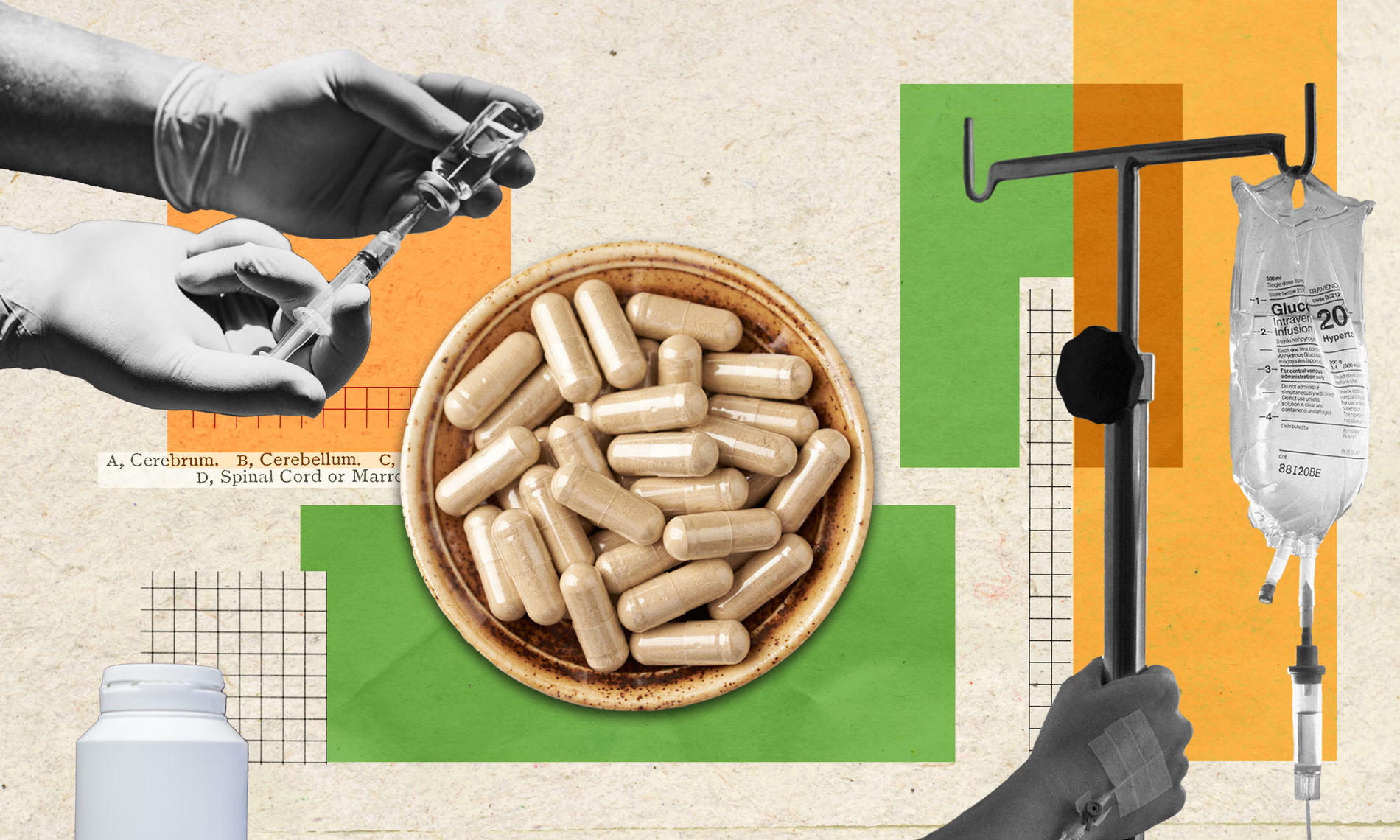
Everyone wants to age better. But between mercury pills and monkey glands, humans have a long history of chasing the wrong solutions. Where does NAD+ fit in?
TL;DR: NAD+ is a real molecule that declines with age and plays crucial roles in cellular energy and repair. Unlike most anti-aging fads, there’s legitimate science here. But the gap between promising research and “live to 150” claims is enormous. NAD+ therapy may have benefits, but it’s not magic, and the delivery method matters.
- NAD+ levels decline 10 to 80% as we age
- This decline is linked to reduced cellular energy and repair capacity
- Animal studies show promise, but human evidence is still developing
- IV NAD+ and oral precursors work differently
- This is one area where working with a knowledgeable physician actually matters
Humans Have Been Chasing Immortality Forever (And Failing)
Before we talk about NAD+, let me give you some historical perspective. Because the search for the “fountain of youth” has led humans down some truly bizarre paths.
Ancient China: Emperor Qin Shi Huang consumed mercury pills intended to grant eternal life. He died at 49. Mercury, it turns out, is poison.
Ancient Rome: People drank the blood of fallen gladiators, believing it would restore youthful strength. It did not.
Medieval Europe: Alchemists developed drinkable gold solutions, reasoning that since gold never tarnishes, it would help the body resist aging. Diane de Poitiers, mistress of King Henry II of France, likely died from chronic gold poisoning. Her remains showed gold levels 500 times normal.
Early 1900s: Neurologist Charles Brown-Séquard injected himself with an emulsion of dog and guinea pig testicles, claiming improved vigor and erections. Surgeon Serge Voronoff grafted monkey testicles onto aging men. Neither approach worked (though Brown-Séquard did accidentally foreshadow testosterone therapy).
Recent decades: Antioxidant megadosing, resveratrol from red wine, various “superfood” extracts. None have convincingly extended human life in controlled trials.
The pattern is clear: we desperately want a simple solution to aging, and that desperation makes us vulnerable to premature conclusions and outright scams.
So when I tell you that NAD+ is different, I want you to understand the context. I’m not saying it’s the fountain of youth. I’m saying it’s actually worth paying attention to, which is more than I can say for most anti-aging interventions.
What Is NAD+ and Why Should You Care?
NAD+ stands for nicotinamide adenine dinucleotide. It’s a coenzyme found in every cell of your body, and it’s absolutely essential for life.
Here’s what NAD+ does:
Energy production. NAD+ is critical for mitochondrial function. Your mitochondria are the power plants of your cells, converting food into usable energy. Without adequate NAD+, this process becomes less efficient.
DNA repair. Your DNA gets damaged constantly, from UV radiation, oxidative stress, and normal cellular processes. Repair enzymes called PARPs require NAD+ to function. Less NAD+ means less efficient repair, which means accumulated damage over time.
Sirtuin activation. Sirtuins are a family of proteins involved in cellular health, metabolism, and longevity. They’re sometimes called “longevity genes.” Sirtuins are completely dependent on NAD+ to function.
Cellular signaling. NAD+ plays roles in calcium signaling, immune function, and circadian rhythm regulation.
Here’s the problem: NAD+ levels decline significantly with age. Studies suggest that NAD+ concentrations in humans may be 10 to 80% lower in older adults compared to younger people. This decline is associated with many hallmarks of aging, including reduced energy, impaired cellular repair, increased inflammation, and higher disease risk.
The question that researchers have been asking for the past two decades: what happens if we restore NAD+ levels in aging organisms?
The Animal Research Is Genuinely Impressive
In 2016, Dr. Shin-ichiro Imai at Washington University School of Medicine published research showing that boosting NAD+ precursors in mice produced effects that looked remarkably like anti-aging.
Since then, hundreds of studies have explored NAD+ in animal models. The results are consistent enough to be noteworthy:
Extended lifespan. NAD+ precursor supplementation in late-life mice increased median lifespan by about 5 to 10%. That’s modest compared to some interventions, but the comprehensive improvement in health metrics makes it interesting.
Improved metabolic function. NAD+ boosting has been shown to improve insulin sensitivity, reduce inflammation, and enhance mitochondrial function in aging animals.
Neuroprotection. In models of neurodegenerative disease, NAD+ repletion improved mitochondrial function, reduced neurodegeneration, and extended lifespan.
Cardiovascular benefits. Aged mice often develop cardiac hypertrophy and fibrosis. Early evidence suggests NAD+ precursors might attenuate these changes.
Vascular function. One study showed that NAD+ supplementation reversed vascular dysfunction and oxidative stress associated with aging in mice.
This is real science, published in respected journals like Nature and Cell. The mechanisms are well-understood. The effects are reproducible.
But here’s the critical caveat that every responsible scientist will tell you: mice are not humans.
The Human Evidence: Promising but Incomplete
Translation from animal models to humans is where most anti-aging interventions fail. What works spectacularly in mice often produces modest or no effects in people.
Where do we stand with NAD+ in humans?
NAD+ levels can be raised. This is well-established. Oral supplementation with NAD+ precursors (like nicotinamide riboside or nicotinamide mononucleotide) does increase NAD+ levels in blood and tissues. One study showed a 74% increase in blood NAD+ compared to 4% in the placebo group.
Safety profile appears reasonable. Multiple trials have shown that NAD+ precursor supplementation is generally well-tolerated in healthy adults. No serious adverse events have been consistently reported at standard doses.
Clinical benefits are less clear. This is where it gets complicated. While NAD+ levels go up, the dramatic health improvements seen in mice haven’t been consistently replicated in humans. Some studies show improvements in markers of inflammation, insulin sensitivity, or muscle function. Others show no significant changes.
The research is still early. Most human trials have been small (dozens of participants, not thousands), short-term (weeks to months, not years), and focused on surrogate markers rather than hard outcomes like disease incidence or mortality.
A 2023 review concluded that NAD+ precursors “are generally safe and may have the potential to support graceful aging in humans” but emphasized that “further research is necessary.”
That’s the honest scientific assessment: potentially beneficial, probably safe, but not yet proven to extend human lifespan or prevent age-related disease.
The Delivery Method Matters
One thing that gets lost in the NAD+ hype is that how you get NAD+ into your body matters significantly.
Oral precursors (NR, NMN). These are the building blocks your body uses to make NAD+. You take them as pills or powders. They’re absorbed through the gut, processed by the liver, and eventually converted to NAD+. This works, but the efficiency varies, and some of the NAD+ may not reach the cells that need it most.
IV NAD+ infusion. This delivers NAD+ directly into the bloodstream. It bypasses the digestive system entirely. The question is whether this NAD+ actually gets into cells effectively. A 2024 study provided evidence that intact NAD+ molecules can pass through specialized channels (connexin 43 hemichannels), which was previously uncertain.
The trade-offs. IV infusions can cause side effects: burning sensation, nausea, brain fog during the infusion. They’re also expensive (often $500 to $1,000+ per session) and time-consuming. Oral precursors are cheaper and more convenient but may be less directly effective.
Here’s what Dr. Neil Paulvin, a longevity medicine specialist, told CNBC: “We know that some infusions may increase the NAD in the bloodstream, but not in the cell as much.” He actually recommends oral precursors over IV for most patients, citing fewer side effects and potentially more benefit.
The point is: this isn’t as simple as “take NAD+ and feel younger.” The biology is complex, and the optimal approach may vary by individual.
Who Might Actually Benefit?
Based on the current evidence, NAD+ therapy seems most relevant for:
People experiencing age-related energy decline. If your mitochondria aren’t functioning optimally, boosting NAD+ may help restore some cellular energy production.
Those with brain fog or cognitive concerns. The brain has enormous energy demands and is particularly sensitive to NAD+ decline. Some patients report improved mental clarity.
People recovering from illness or dealing with long COVID. There’s emerging interest in NAD+ for post-viral fatigue and recovery, though this research is still preliminary.
Individuals interested in proactive longevity support. If you’re in your 30s or 40s and want to maintain cellular function as you age, NAD+ therapy may be worth considering as part of a broader strategy.
Those with specific conditions. Some research shows promise for Parkinson’s disease, fatty liver disease, and metabolic dysfunction, though these applications are still being studied.
Who should be cautious? People with liver or kidney issues should consult their physician, as these organs are key for NAD+ metabolism. Pregnant or breastfeeding women should probably avoid NAD+ supplementation until more safety data is available.
What I Actually Offer My Patients
I want to be transparent here. I offer NAD+ therapy to my patients, including IV infusions and guidance on oral precursors. But I do so with a specific philosophy.
It’s not a magic bullet. NAD+ is one tool in a comprehensive approach to aging well. It’s not a substitute for proper nutrition, exercise, sleep, stress management, and addressing underlying health conditions.
Individual assessment matters. Not everyone needs NAD+ therapy, and those who might benefit need proper evaluation to determine the right approach, dosage, and delivery method.
Expectations should be realistic. I’m not promising you’ll live to 150 or reverse 20 years of aging. I’m offering a therapy that may support cellular function and energy as you age, based on plausible mechanisms and emerging evidence.
Monitoring is important. When patients receive NAD+ therapy, we track their response and adjust accordingly. This isn’t something you should do blindly based on TikTok recommendations.
Quality control matters. Supplements are not regulated like drugs. What’s on the label may not be what’s in the bottle. When I recommend or provide NAD+ precursors, I use sources I trust.
The supplement industry has a long history of overpromising and underdelivering. I have no interest in being part of that tradition. What I am interested in is giving patients access to interventions that have genuine scientific rationale, administered responsibly.
The Lifestyle Factors That Actually Work
Here’s something that often gets buried in discussions of anti-aging supplements: we already know interventions that extend healthy lifespan in humans. They’re just not as exciting as taking a pill.
Caloric restriction. In animals from mice to chimps, eating less consistently extends life. The CALERIE trial in humans showed that even modest calorie restriction (12% reduction) produced measurable slowing of biological aging markers.
Exercise. Regular physical activity is one of the most robust predictors of healthy aging. It improves mitochondrial function (which relates directly to NAD+), reduces inflammation, and maintains muscle mass.
Sleep. Adequate sleep is when much of cellular repair happens. Chronic sleep deprivation accelerates biological aging.
Plant-based diet with adequate protein. The evidence consistently points to mostly plant-based eating with 1 to 1.2 grams of protein per kilogram of body weight as optimal for longevity.
Stress management. Chronic stress drives inflammation and accelerates cellular aging.
NAD+ therapy might enhance these foundations, but it can’t replace them. Anyone selling you NAD+ as a shortcut around healthy living is misleading you.
The Bottom Line on NAD+
Let me summarize where we actually stand:
The science is real. NAD+ is a legitimate molecule with well-understood functions that decline with age. This isn’t pseudoscience.
Animal research is compelling. The effects in mice and other models are reproducible and significant.
Human evidence is promising but incomplete. We can raise NAD+ levels in people. Whether this translates to meaningful health benefits at scale is still being determined.
It’s not the fountain of youth. Anyone claiming NAD+ will let you “live to 150” is extrapolating far beyond the evidence.
Responsible use makes sense for some people. Under proper medical guidance, NAD+ therapy may be a reasonable component of a longevity-focused health strategy.
Hype should be viewed skeptically. Celebrity endorsements, supplement company marketing, and social media claims should not be confused with scientific evidence.
We’ve been searching for the fountain of youth for millennia. We haven’t found it yet, and NAD+ isn’t it either. But it might be one piece of a larger puzzle that helps us age with more energy, better function, and improved quality of life.
That’s not immortality. But it’s worth pursuing.
Key Takeaways
- NAD+ is a real coenzyme that declines 10 to 80% with age
- Animal studies show significant benefits, but human evidence is still developing
- NAD+ therapy can raise levels in humans, but clinical benefits are not yet conclusively proven
- Delivery method (oral vs. IV) matters and involves trade-offs
- NAD+ should complement, not replace, established longevity practices like exercise and proper nutrition
- Work with a knowledgeable physician rather than self-prescribing based on hype
A Final Thought
The history of anti-aging medicine is littered with failures, frauds, and well-intentioned mistakes. Mercury, gold, monkey glands: all made sense to someone at the time.
NAD+ is different in that the underlying science is solid. But solid science doesn’t guarantee clinical success. The gap between “this mechanism matters” and “this intervention works” has swallowed many promising therapies.
I offer NAD+ therapy because I believe the rationale is sound and the risk-benefit profile is reasonable for appropriate patients. But I do so with humility about what we don’t yet know, and with honesty about what the evidence does and doesn’t support.
If you’re interested in exploring NAD+ therapy, I’m happy to discuss whether it might be appropriate for your situation.